


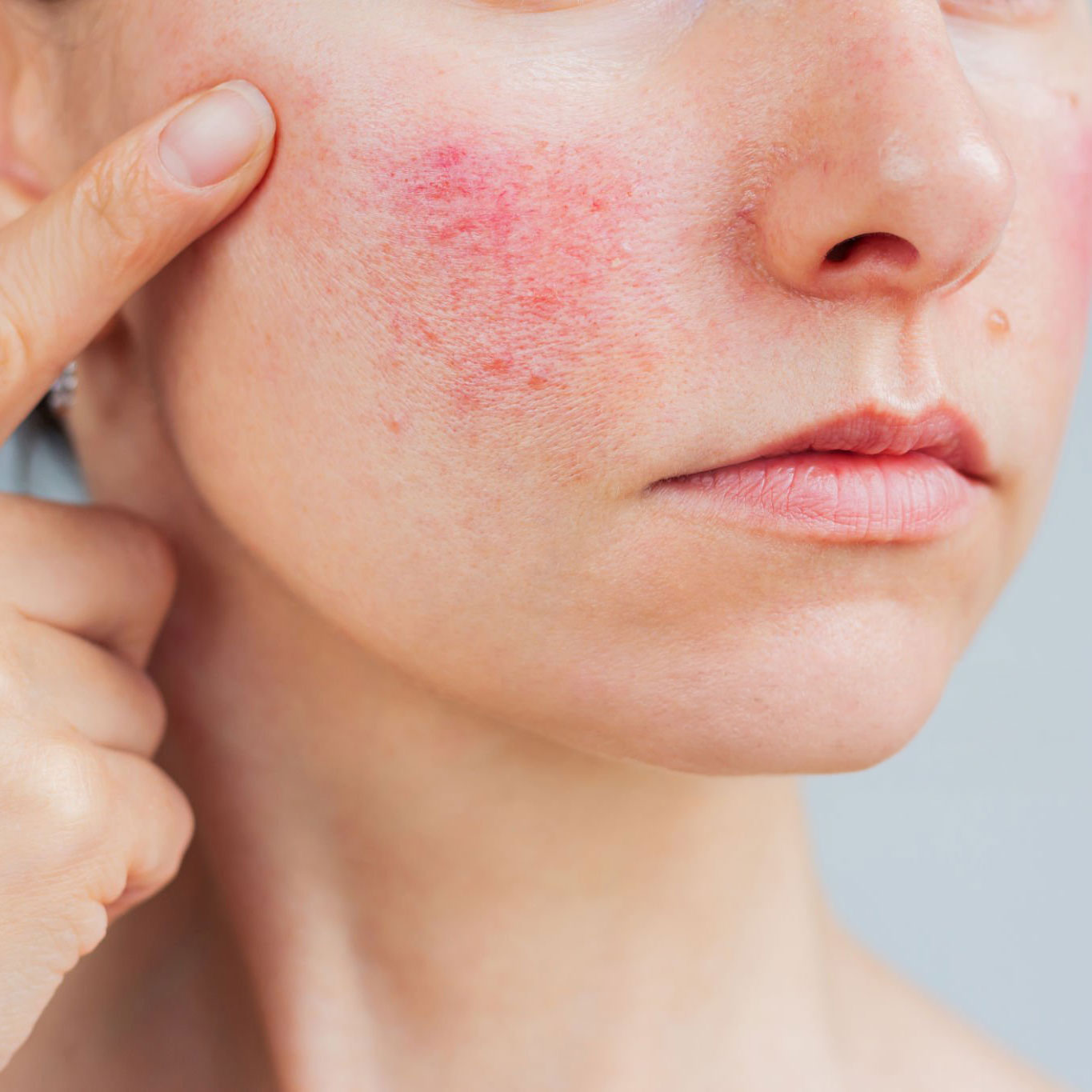
Rosacea is a chronic facial skin condition characterized by centrally located redness of the face, visible dilated capillaries, and pustules. It occurs more frequently in women than in men. In men, it is more commonly localized on the nose, with a tendency to form granulomatous tissue, known as rhinophyma.
The exact cause of rosacea has not been fully established. It is believed to be related to a constitutional instability of small blood vessels, which makes them more reactive. Certain triggers—such as spicy food, alcohol consumption, hormonal influences (e.g., menopause), and disturbances in the autonomic nervous system—can lead to redness in the central areas of the face.
The condition usually begins with redness on the nose and cheeks and less commonly on the forehead and chin. Initially, the redness is temporary, but over time it can become permanent. In some patients, it spreads across the cheeks in a butterfly-like pattern. On the smooth, reddened skin, small dilated blood vessels become visible.
If Rosacea is not treated, additional symptoms may develop, including papules, pustules, swelling (edema), skin thickening (infiltration), connective tissue hyperplasia, and enlargement of sebaceous glands. Reddish nodules may also appear.
Diagnosis is based on the clinical presentation. Today, Rosacea is often associated with the presence of the bacterium Helicobacter pylori in the stomach.
General treatment includes oral antibiotics, while local therapy involves antibiotic creams and liquid powders.
However, Rosacea is also an aesthetic problem. Therefore, in addition to standard systemic and topical therapy, treatments such as mesotherapy and botulinum toxin injections in affected areas can be used.
It is important to avoid external and internal triggers that can cause facial redness. Spicy foods, alcohol, digestive issues, sun exposure, and excessive heat can all worsen rosacea.
In topical care, irritating factors such as alcohol-based products and harsh solutions should be avoided.
Mesotherapy is a treatment used for managing Rosacea. It involves injecting active substances—such as vitamins, minerals, amino acids and antioxidants—into the middle layer of the skin (the mesoderm) using fine needles. The goal is to soothe the skin, reduce redness and inflammation, and improve overall skin condition.
The main active ingredients in mesotherapy cocktails include bio-extracts, vitamin B, azelaic acid and troxerutin. These substances are injected directly into the skin, where they help reduce redness, inflammation and other Rosacea symptoms, while improving skin tone and radiance.
Mesotherapy for Rosacea is typically performed after a skin assessment to determine the most suitable active ingredients for the individual’s skin type and condition. It is carried out in a series of treatments according to a therapy plan, most commonly 3–6 sessions for optimal results. In addition to mesotherapy, complementary treatments such as boosters may be used to further enhance the results.

