


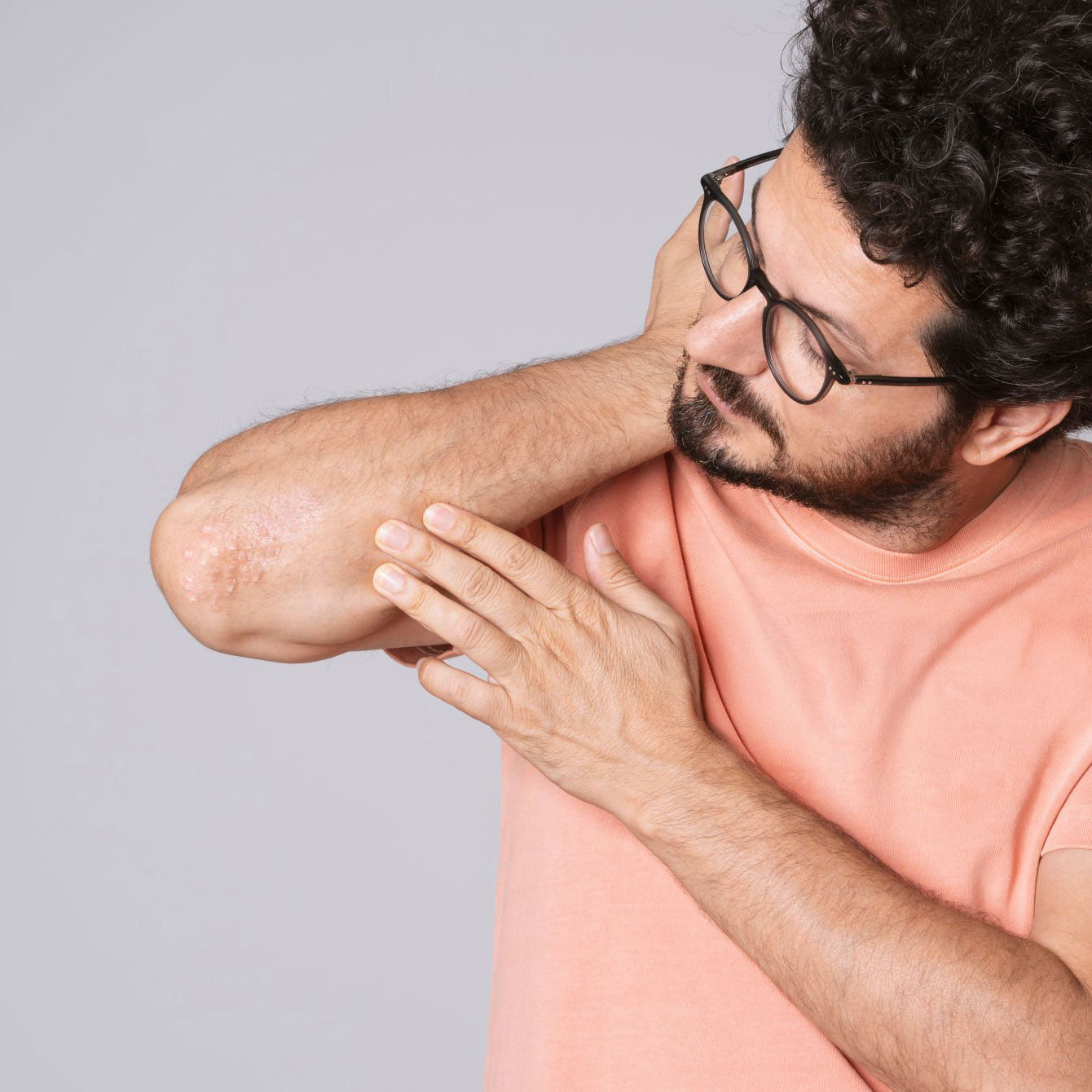
Psoriasis is an inflammatory skin condition characterized by increased epidermal cell proliferation. Clinically, it presents as reddish patches covered with silvery scales. It is a common disease, affecting 1–5% of the global population.
Based on age of onset, two forms are distinguished:
• early-onset (before age 40), with peak incidence around 22 years
• late-onset (after age 40), with peak incidence around 55 years
Both sexes are affected equally.
The exact cause is not fully understood, but genetic predisposition and triggering factors play a key role. Common triggers include severe stress, physical or chemical injury, infections (especially acute streptococcal throat infections), certain medications (e.g., systemic corticosteroids, beta-blockers), pregnancy and childbirth, specific diets, alcohol, and chronic conditions such as diabetes type 2 and hypertension.
Commonly affected areas include the elbows, knees, scalp, intergluteal region and nails. The primary lesion is a well-defined reddish patch of varying size, covered with silvery scales. When scraped, the scales resemble candle wax (the “candle wax sign”). Continued scraping reveals a thin, smooth, moist layer of skin, followed by pinpoint bleeding known as the Auspitz sign.
Diagnosis is based on medical history, clinical symptoms and can be confirmed by histopathological analysis of a skin biopsy.
Treatment depends on disease severity, which is assessed using indices such as PASI (Psoriasis Area and Severity Index), BSA (Body Surface Area), and DLQI (Dermatology Life Quality Index).
Treatment options include:
• Topical therapy (for mild forms): keratolytics, topical corticosteroids, anthralin, vitamin D analogues, topical retinoids
• Phototherapy and photochemotherapy (PUVA)
• Systemic therapy (for moderate to severe cases): cyclosporine, antibiotics, corticosteroids.
Caution is required with corticosteroids due to the risk of rebound effects (worsening of the disease after discontinuation).
Since psoriasis is a chronic condition, treatment can be long-term and sometimes challenging. Education about the disease and adherence to dermatological advice are essential. Recommended lifestyle measures include:
• maintaining proper skin hygiene and care
• reducing stress and practicing relaxation techniques
• eating a balanced and healthy diet
• getting sufficient sleep
• avoiding smoking and alcohol
• maintaining a positive attitude toward the condition
Sun exposure and seawater can have beneficial effects for many patients. Controlled exposure to sunlight can reduce inflammation, promote healing, and slow down scaling. However, excessive exposure may trigger new lesions (Koebner phenomenon). Regular use of emollients and proper photoprotection (moisturizing sunscreens) is essential.

