


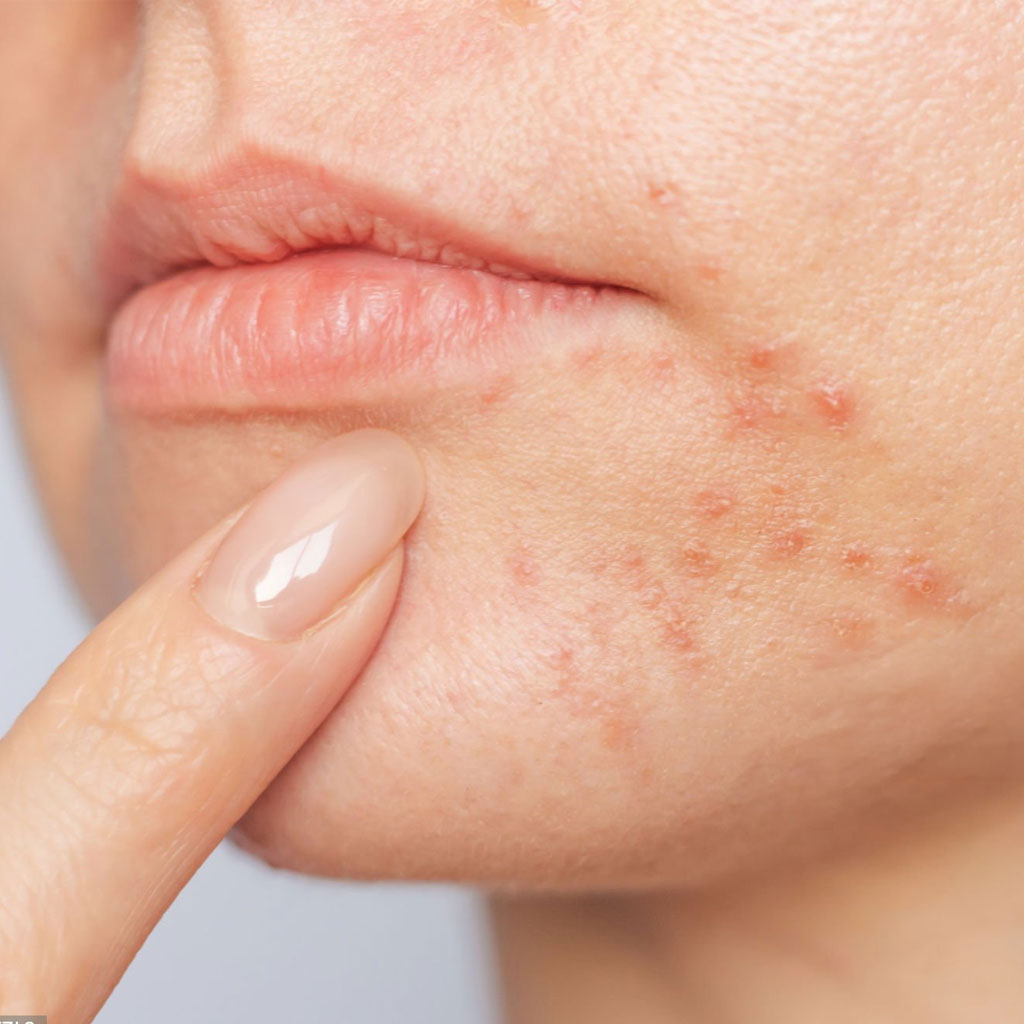
Acne vulgaris is one of the most common skin conditions. It occurs equally in both sexes, most often during puberty, and appears on seborrheic areas of the skin—such as the face, neck, shoulders, chest and back.
It is characterized by oily skin with the formation of:
• comedones, papules, and pustules
• post-inflammatory darker skin (hyperpigmentation)
• post-inflammatory lighter skin (hypopigmentation)
• scars in the form of pitted skin after acne heals
• long-lasting, thick scars (keloids)
A key role in the development of acne is played by genetic predisposition, followed by hormonal imbalance, which usually occurs during puberty. At that time, the balance of sex hormones is disrupted—either through increased androgen levels or decreased estrogen levels (depending on sex)—which leads to enlargement of sebaceous glands and increased sebum production.
Skin changes can be divided into primary (non-inflammatory) and secondary (inflammatory). Primary changes include comedones, while secondary changes include papules, pustules, and inflammatory nodules. As a result of these changes, cysts and atrophic or hypertrophic scars may remain.
Based on the type of skin changes and severity, several clinical forms are recognized:
• Acne comedonica – the mildest form, dominated by comedones with a small number of papules or papulopustules.
• Acne papulopustulosa – a moderate form, where in addition to comedones there are red, painful, pus-filled papules. This type can also appear on the back, not just the face.
• Acne conglobata – the most severe form. The inflammatory process affects deeper parts of the follicle and surrounding tissue, leading to deep, firm and painful nodules. Healing results in significant atrophic and hypertrophic scarring, keloids, and cysts. Besides the face, it often affects the upper trunk, neck, upper arms and lower back.
Diagnosis is based on the clinical picture through examination by a dermatologist. In some cases, laboratory tests are required, for example in polycystic ovary syndrome (blood tests, hormonal status).
Treatment is individualized depending on the type and severity of acne. It may include topical (local) therapy, oral therapy (antibiotics and Roaccutane) or a combination of both.
Acne is a condition that can be fully treated, but it requires up to a year of consistent therapy and adherence to prescribed treatment. Early treatment is essential to prevent aesthetic complications.
Although acne-related pigmentation usually fades within six months to a year, in some cases it may be permanent.
Atrophic or hypertrophic scars, resulting from more severe forms of acne, often remain visible. Microneedling treatment can provide noticeable improvement in acne scars.
Chemical peels are intended for milder forms of acne and can visibly improve post-inflammatory changes such as hyperpigmentation.
Depending on severity, acne can cause emotional stress and leave permanent marks on the skin. The earlier treatment begins, the lower the risk of such complications. Stress does not cause acne, but it can worsen acne. Consuming foods high in artificial sweeteners, fats, unhealthy carbohydrates and GMO food can worsen the condition and slow down treatment. Mechanical squeezing of acne is not recommended, as it promotes bacterial spread and increases the risk of scarring. Acne is not caused by poor hygiene; in fact, excessive scrubbing or use of harsh soaps and aggressive products can irritate the skin and worsen acne.

