


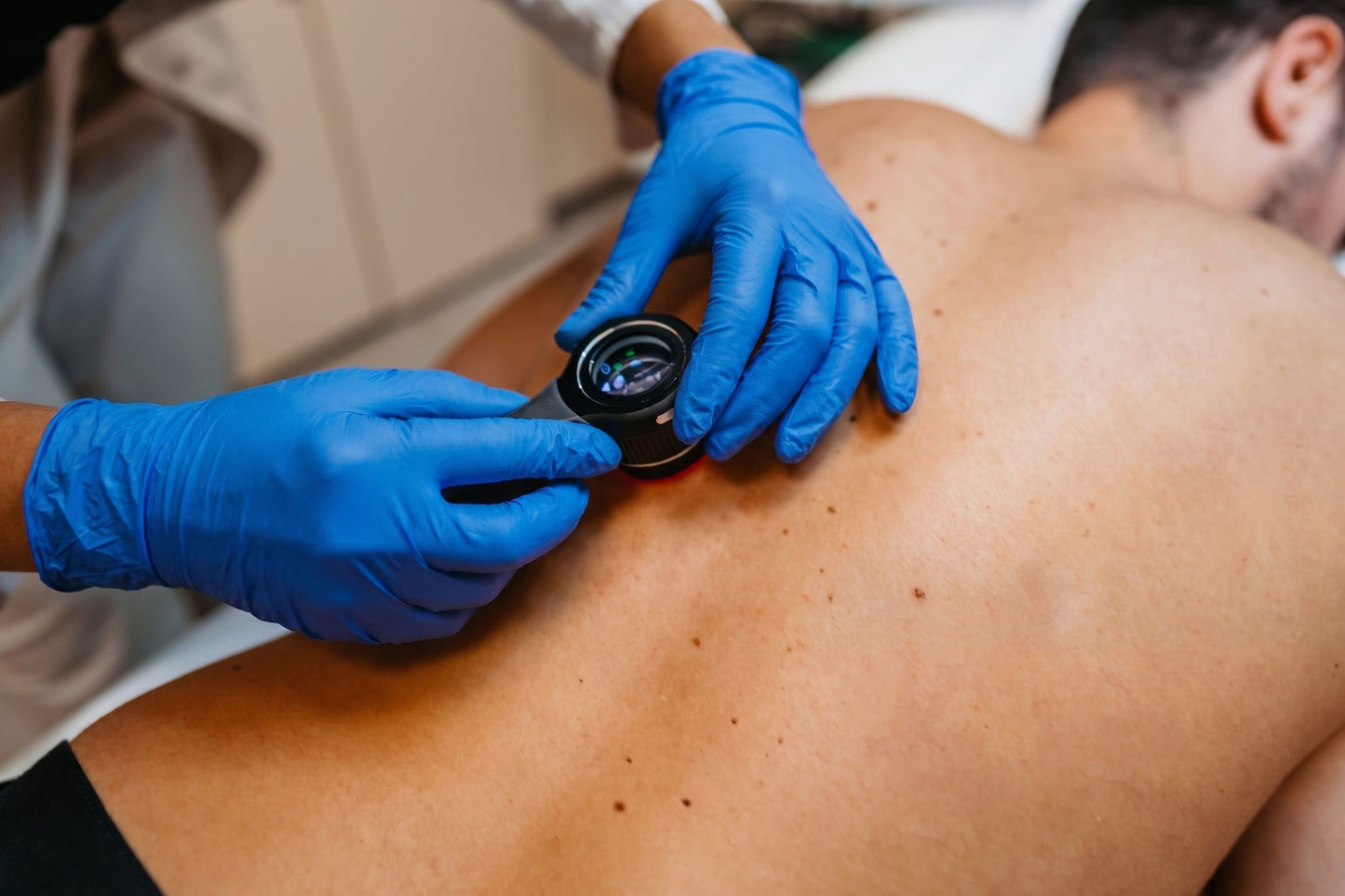
Malignant melanoma is one of the most aggressive tumors of the skin and mucous membranes. It arises from the malignant transformation of melanocytes and is characterized by local aggressiveness and early lymphatic and hematogenous metastasis. It is more common in middle age and women are affected more often than men. Its incidence has significantly increased over the past decades.
Causes include sun exposure, fair skin, outdoor occupations, genetics, trauma or irritation of moles, immunosuppression, and hormonal influences.
Lesions are usually dark brown or black, sometimes with blue-gray or pinkish tones.
Clinical types include:
• Melanoma arising from a dysplastic nevus – small pigmented papule with irregular pigmentation among multiple moles.
• Melanoma in situ – flat lesion with irregular borders, brown to black with possible blue-gray areas.
• Superficial spreading melanoma – irregular dark brown or black lesion, sometimes with blue-gray, pink, or white areas. In men, it often appears on the upper back; in women, on the lower legs. It may arise from a mole or on normal skin.
• Nodular melanoma – firm, dark blue, black, or gray-black nodules or plaques, often ulcerated.
• Acral lentiginous melanoma – occurs on palms, soles, and nail beds.
• Mucosal melanoma – rare, affecting mucosal areas such as the oral cavity, nose, vulva, vagina, anorectal region, and conjunctiva.
Diagnosis is based on clinical examination and confirmed by dermoscopy and histopathology. Staging is done using the Clark and Breslow systems, which assess tumor depth and thickness.
Treatment is primarily surgical. In cases of metastasis, additional treatments may include surgery, radiotherapy, chemotherapy, chemoimmunotherapy and targeted biological therapy.
Prevention includes limiting sun exposure and early detection.
Protective measures include SPF 50+ sunscreen, protective clothing and hats, and avoiding excessive sun exposure. Regular self-examinations, awareness of risk factors and routine dermatological dermoscopic checks are essential for early diagnosis.

